
Khatunganj, a historic commercial hub in Chattogram, Bangladesh, dated back to the 2nd century, serves as one of the largest wholesale markets in the region. Strategically located along the Karnaphuli River and adjacent to the Chaktai Canal, it facilitates vital local, national, and international trade networks. Despite its historical and economic significance, Khatunganj market faces challenges such as deteriorating infrastructure, traffic congestion, waterlogging, and the deterioration of heritage buildings, all of which threaten its sustainability as a trading center. The study evaluates Khatunganj's historical evolution, trading environment, market typologies, and infrastructure to identify its strengths and weaknesses. This study employs a mixed-methods approach—consisting of field surveys, interviews, mapping, and data analysis—to assess Khatunganj’s current condition. A total of 150 respondents were surveyed, with over 130 stakeholders interviewed, including traders, architects, planners, and local officials. Quantitative analysis used percentages and scoring matrices, while qualitative insights and validation were obtained through thematic coding and feedback from experts and users. The key strengths identified includes 24-hour trade activity, pedestrian-friendly verandas, historical facades, and robust connectivity by land and water. However, significant weakness observed in infrastructure, mobility, and environmental resilience, with narrow roads, insufficient drainage, and the deterioration of heritage buildings being critical concerns. The Strengths, Weaknesses, Opportunities and Threats (SWOT) analysis highlighted Khatunganj's strong commercial culture and strategic location but pointed out threats like poor governance, seasonal flooding, and the encroachment of modern commercial areas. The study’s evaluation matrix revealed moderate performance by scoring 88-point, surpassing the 84-point threshold, highlighted the need for improved infrastructure and waste management. This paper proposes evidence-based urban renewal strategies (scoring 66 points, below the threshold of 76) focusing on enhancing mobility, preserving heritage, and upgrading infrastructure, providing a framework for revitalizing historic trade hubs. The SWOT analysis informed the proposed interventions, ensuring Khatunganj’s economic viability, enhance its cultural preservation, and mitigate its environmental risks for future generations.
| Published in | Urban and Regional Planning (Volume 11, Issue 1) |
| DOI | 10.11648/j.urp.20261101.14 |
| Page(s) | 63-81 |
| Creative Commons |
This is an Open Access article, distributed under the terms of the Creative Commons Attribution 4.0 International License (http://creativecommons.org/licenses/by/4.0/), which permits unrestricted use, distribution and reproduction in any medium or format, provided the original work is properly cited. |
| Copyright |
Copyright © The Author(s), 2026. Published by Science Publishing Group |
Khatunganj, Historical Trade Hub, Infrastructure Decay, Chattogram, Wholesale Market, Urban Revitalization, Heritage Preservation, Mixed-methods, Stakeholder Analysis
Key Findings from Mehanna (2019) | Correspondence in Khatunganj |
|---|---|
Linear markets grow along main traffic corridors, forming continuous streets | Khatunganj is located on a primary traffic corridor with a strong linear market form |
Pedestrian streets vary from full malls to semi-/transit malls depending on pedestrian–vehicular interactions | Market reflects pedestrian–vehicular interaction patterns consistent with linear typologies |
Ramified markets develop around cultural or religious focal points; aggregated markets cluster around public spaces | Though primarily linear, Khatunganj integrates community and cultural spaces linked to its trading activity |
Historic markets typically exhibit architectural diversity and cultural continuity | Khatunganj contains historically significant buildings, unique architectural features, and cultural memory |
Criteria | Observations in Khatunganj | Score (6/4/2) | Total Score |
|---|---|---|---|
Street Characteristics | Historic center location; width < 10m; length < 1.5 km; human scale; average accessibility | Mostly 6–4 | 88 |
Traffic Conditions | High pedestrian density; low vehicle ratio; parking absent; service access conflicted | Mixed 6/4/2 | |
Commercial Structure | More than 10 activities; diverse wholesale and retail functions | 6 | |
Environmental Factors | Favorable street orientation; partial shading/ventilation; flat land, limited comfort | 4–2 | |
Community Participation | >60% approval from both users and shop owners | 6 |
Domain | Issues Identified | Stakeholder Feedback Summary |
|---|---|---|
Economy | Market condition, loading/unloading, traffic, labor facilities | Goods damaged during waterlogging; lack of unloading bays; inadequate facilities for workers. |
Environment | Drainage, waste management, air quality | Seasonal waterlogging; poor sanitation; environmental hazards due to canal stagnation. |
Culture | Heritage, social interaction, tourism | Strong support for adaptive reuse of historic buildings; demand for heritage tourism opportunities. |
Governance | Management, decision-making, policy support | Poor hygiene and waste management; governance gaps; political and institutional obstacles. |
Future Planning | Circulation, parking, master plan, modernization | Strong demand for circulation re-planning, parking zones, and integrated master plan. |
Category | Strengths / Positive Aspects | Weaknesses / Deficiencies |
|---|---|---|
Market System Functionality | Strong trading culture and adaptability | No unloading bays, poor scheduling, storage congestion |
Infrastructure Readiness | Strategic central location | Waterlogging, unreliable utilities, lack of amenities |
Social Infrastructure | Dense urban fabric and accessibility potential | Weak public transport linkages, congestion, poor emergency access |
Economic & Cultural Viability | Heritage identity, tourism potential | Declining resilience, underused heritage, economic loss risks |
Safety & Comfort | Large user base, vibrant daily activity | Overcrowding, poor shading/ventilation, weak security |
Governance & Maintenance | Existing market associations | Inactive management body, inadequate budgets, lack of policy alignment |
SWOT | Strengths, Weaknesses, Opportunities and Threats |
DO | Delivery Order |
CDA | Chattogram Development Authority |
Urban Renewal Assessment Matrix: A Multi-Criteria Evaluation Framework for Revitalizing Historic Commercial Areas based on Mehanna (2019). | ||||
|---|---|---|---|---|
Criteria | Issues | Number of points per item | ||
6 | 4 | 2 | ||
Street Characteristics | Location | Historical Center | City center | Outskirts of the city |
Street width | < 10m | Between 10m to 15m | >15m | |
Street length | < 1.5km | Between 1.5 km to 3 km | > 3km | |
Street scale | Friendly | Human scale | Monumental scale | |
Accessibility | High | Average | Low | |
Functional continuity | Good | Acceptable | Low | |
Traffic Conditions | Intensity of vehicle | Low ratio | Average ratio | High ratio |
Intensity of pedestrians | High ratio (more than 3 persons/m²) | Average ratio (3 persons/m²) | Low ratio (less than 3 persons/m²) | |
Parking | About 800m away | About 1000m away No specific servicing but with certain times of Service specified | More than 1000m away | |
Serving | Side streets | Accessible | No scope for servicing except car entry | |
Easy access | Easy | Average | Hard | |
The relationship between vehicles and pedestrians | Conflicted | Balanced | No Conflict | |
Absorption of parallel streets for car movement | High ratio | Average ratio | Low ratio | |
Commercial structure | Types of shop | Suitable for pedestrian streets | Corresponds to some pedestrian requirements | Compatible only with mixed traffic streets |
Diversity of activities | High (More than 10 activities) | Average (between 4 and 10 activities) | Low (Fewer than 4 activities) | |
Environmental factors | Street orientation | Good (parallel or tilted 20°–30° on N-S axis) | Average (tilted >30°) | Bad (Perpendicular to favorable wind) |
Street Shading | Available | Can be improved | Not available | |
Street ventilation | Good | Average | Bad | |
Land topography | Different levels | Low slope | Flat | |
Community participation | The opinion of users about Turning the street into a Pedestrianized street | An approval rate of 60: 100% | An approval rate of 50 - 59% | Less than a 50% approval rate |
The opinion of shop-owners about turning the street into a pedestrianized street | An approval rate of 60: 100% | An approval rate of 50 - 59% | Less than a 50% approval rate | |
Total point | More than 84 points | 84 points | Less than 84 points | |
Questions / Issue | Stakeholder | Key Feedback / comments | Thematic code |
|---|---|---|---|
How does waterlogging affect daily loading/unloading? | Local Traders | Goods often get damaged; trucks can’t enter for 3–4 hours. | Operational Disruption |
How do you manage deliveries during waterlogging? | Traders & Transport Workers | Delay shipments or use smaller boats; costly and risky. | Adaptive Strategy |
What are the economic impacts of waterlogging? | Local Traders | Delays cause financial loss; clients complain; perishable goods wasted. | Economic Loss |
Biggest operational challenge in recent years? | Market Organization Secretary | Trade volume decreased; canal transport no longer functional; transport cost higher; fraud increasing; Chattogram Development Authority CDA hasn’t provided solution. | Operational Disruption, Waterlogging Impact, Economic Loss |
How does waterlogging affect warehouse operations? | Warehouse Managers | Ground floor stocks moved to higher levels; extra labor cost. | Adaptive Strategy |
What are the per-truck & labor costs? | Local Traders, Truck Drivers, Brokers | Per truck 150 mon goods; labour 4 tk/mon; broker 100–150 tk/truck; warehouse rent 25,000+ tk; manager 20,000 tk/month; labour 13,000 tk; per package loading/unloading 20 tk. | Cost Structure Insight |
Transport rates via ghats and alternative channels? | Boat / Push Cart Operators | Fishery ghat: 600 tk; Chaktai khal: 25–30 tk; outside Chattogram 20,000–250,000 tk per delivery in truck; Good price vary subject to tax, transport cost, dollar rate, international market fluctuations. | Transport Cost Insight, International Trade Impact |
Are there facilities for rest or toilet during work? | Day Laborers | No rest area, no toilets; difficult working conditions during waterlogging. | Poor Amenities |
How does waterlogging impact the local environment? | Local Traders & Residents | Water stagnation damages canals and drains; creates health hazards. | Environmental Issue |
Questions / Issue | Stakeholder | Key Feedback / comments | Thematic code |
|---|---|---|---|
How does traffic congestion affect unloading? | Transport Workers | Often wait a day; clients complain. | Supply Chain Delay |
Are there seasonal variations in congestion? | Transport Workers | Before Eid, congestion doubles; no traffic plan. | Seasonal Variation |
Is unloading infrastructure sufficient? | Traders & Warehouse Managers | Need dedicated unloading bay; waste disposal poor. | Infrastructure Constraint |
How does pedestrian infrastructure affect movement? | Clients | No dedicated pedestrian, causing safety and movement problems. | Pedestrian Infrastructure Gap |
How do narrow lanes & small vehicle traffic affect operations? | Local Traders | Narrow lanes blocked by vans/rickshaws; unloading slower. | Last-Mile Blockage |
Is parking available for trucks? | Truck Drivers | No designated parking; forced to unload on main road. | Parking Constraint |
What is the impact of damaged roads? | Transport Workers | Damaged surfaces slow movement and increase accident risk. | Road Condition Issue |
How does poor infrastructure affect cultural heritage areas? | Planners / Architects | Old building facades and heritage streets are at risk; poor traffic circulation increases damage. | Heritage Conservation |
Are environmental concerns considered in planning traffic? | Planners & CDA Officials | Stagnant water and blocked canals worsen environmental conditions. | Environmental Issue |
Questions / Issue | Stakeholder | Key Feedback / comments | Thematic code |
|---|---|---|---|
How is market cleanliness and hygiene? | Local Traders & Warehouse Managers | Waste disposal is poor; affects customer satisfaction. | Hygiene Issue |
Are management practices effective? | Traders & Transport Workers | Market lacks proper management and coordination. | Management Gap |
How do stakeholders suggest improvements? | All Stakeholders | Better drainage, traffic plan, organized unloading bays; revive canals; heritage/tourism potential; circulation plan; parking/loading areas. | Improvement Suggestions, Urban Renewal, Tourism Potential |
Are traders involved in decision-making? | Local Traders | Most decisions taken by a few leaders; others uninformed. | Governance Gap |
How are disputes resolved? | Association Members | Informal negotiation; no formal complaint system. | Dispute Resolution Issue |
What are constraints in implementing solutions? | CDA Officials | Political influence, land encroachment, private ownership, natural lowland conditions delay canal revival projects. | Governance Challenge |
How do economic and international factors affect trade? | Importers / Exporters | Dollar rate fluctuations, tax, transport costs affect order volumes and pricing. | Economic Issue, International Trade Impact |
How does market management affect cultural activities? | Local Traders & Residents | Lack of organized heritage/cultural spaces reduces tourism and cultural participation. | Cultural Issue, Heritage Conservation |
Questions / Issue | Stakeholder | Key Feedback / comments | Thematic code |
|---|---|---|---|
Do stakeholders want circulation re-planned for traffic & trucks? | Local Traders, Truck Drivers | “Yes, proper circulation and alternative routes needed for smooth loading/unloading.” | Circulation Planning |
Do stakeholders want new parking facilities? | Traders, Transport Workers, Clients | “Dedicated parking for trucks and carts is essential to reduce congestion.” | Parking Improvement |
Do stakeholders want new load/unload zones? | Traders, Warehouse Managers | “Organized loading/unloading bays to reduce time and risk.” | Loading/Unloading Planning |
Do stakeholders support a new master plan for Khatunganj? | All Stakeholders | “Yes, integrated master plan including circulation, heritage, tourism, and market improvement.” | Master Plan Support |
Should heritage buildings be adaptively reused? | Planners, Architects, Traders | “Yes, old shop-houses and buildings should be revitalized for heritage and commercial use.” | Heritage Re-adaptive Use |
Do stakeholders want tourism introduced? | Traders, Residents | “Yes, controlled heritage & cultural tourism can boost economy and market visibility.” | Tourism Potential |
Should economy & culture be strengthened via market development? | Local Traders, Exporters | “Yes, preserving trade culture while improving modern facilities is desired.” | Economic & Cultural Development |
Do stakeholders want modernization with traditional context maintained? | All Stakeholders | “Yes, modern facilities (utilities, internet, shops) while maintaining market character.” | Modernization with Context |
Are social infrastructure improvements needed? | Residents, Day Laborers | “Roads, public toilets, stalls, rest areas, safety measures required.” | Social Infrastructure |
Are recreational & religious facilities needed? | Residents, Traders | “Yes, community spaces and small recreational/religious areas will improve environment.” | Recreational & Religious Spaces |
Do stakeholders want planners, architects, and government support for policy/zoning? | Traders, Planners, CDA Officials | “Yes, guidance for zoning, circulation, heritage protection, and urban renewal is required.” | Policy & Planning Support |
Criteria | 6 Points (Fully Ready) | Points (Partially Ready) | 2 Points (Not Ready) | Observations in Khatunganj (from thematic codes) |
|---|---|---|---|---|
Market System Functionality | Adequate unloading bays; smooth scheduling; nearby warehouses reduce congestion | Limited unloading facilities; some conflicts in scheduling; partial storage solutions | No proper facilities; frequent obstruction; constant conflicts; no off-site storage | Poor facilities, operational disruptions, last-mile blockages, and congestion |
Infrastructure Readiness | Efficient drainage; reliable utilities; adequate street furniture and amenities | Minor flooding in extreme events; some utility disruptions; some amenities missing | Frequent waterlogging; utilities inaccessible; minimal amenities | Severe drainage issues; poor amenities; environmental risks |
Social Infrastructure | Strong transport connectivity; full emergency access; efficient parallel street absorption | Limited access within 500m; moderate delays in circulation | Poor connectivity; difficult emergency access; severe congestion | Pedestrian infrastructure gaps; circulation planning deficiencies |
Economic & Cultural Viability | Businesses resilient; stable/growing sales; strong tourism potential; heritage well-maintained | Moderate adaptability; stable but no growth; moderate tourism; partial heritage use | High resistance to changes; declining sales; heritage neglected/demolished | Economic losses; weak resilience; underused heritage |
Safety & Comfort | Effective crowd management; good microclimate; strong security | Occasional overcrowding; partial comfort measures; partial coverage | Frequent overcrowding; poor shading/ventilation; weak security | Overcrowding; poor amenities; weak surveillance |
Governance & Maintenance | Active management body; dedicated budget; full policy alignment | Inactive body; partial budget; partial policy support | No management body; no budget; no policy support | Governance gaps; weak policy & institutional support |
Total Points | More than 76 points | 76 points | Less than 76 points |
| [1] | Ahmed, S. U. (1981). Bangladesh district gazetteers: Chittagong. Dhaka: Government of Bangladesh. |
| [2] | Bose, S. (2006). A hundred horizons: The Indian Ocean in the age of global empire. Harvard University Press. |
| [3] | Chattopadhyay, D. P. (2002). History of the Bengali people: Ancient period. Oxford University Press. |
| [4] | Chaudhuri, K. N. (1985). Trade and civilisation in the Indian Ocean: An economic history from the rise of Islam to 1750. Cambridge University Press. |
| [5] | Dooley, D. (2001). Social research methods (4th ed.). Prentice Hall. |
| [6] | Embaby, M. (2014). Sustainable urban rehabilitation of historic markets: Comparative analysis. International Journal of Engineering Research & Technology (IJERT), 3(4). Retrieved from |
| [7] | Agun, G. A., & Banik, N. (2019). Regeneration strategy of oldest commercial hub of Bangladesh: Land use development across Khatunganj, Chattogram. In Proceedings of the 1st International Conference on Urban and Regional Planning. Dhaka: Bangladesh Institute of Planners. |
| [8] | McPherson, K. (1993). The Indian Ocean: A history of people and the sea. Oxford University Press. |
| [9] | Mehanna, W. A. E.-H. (2019). Urban renewal for traditional commercial streets at the historical centers of cities. Alexandria Engineering Journal, 58(4), 1127-1143. |
| [10] | Parvez, S. (n.d.). Shohag Parvez art work - Artpeople Gallery. Artpeople Gallery. Retrieved November 23, 2024, from |
| [11] | Rashid, H. A., Fazal, A., Javaid, Y., & Kausar, N. (2021). Infrastructure and economic growth in South Asian countries. Journal of Indian Studies, 7(1), 81-92. Retrieved from |
| [12] | Rashid, H. A., & Fazal, A. (2022). Challenges of urban renewal in historic South Asian markets. Urban Planning Review, 15(2), 142-159. |
| [13] | Shehab El-Deen, A., Aboul Saadat, M., & Nour, M. (2024). Stakeholder participation in urban heritage renewal: A framework for historic markets. Journal of Urban Management, 13(2), 55-72. |
| [14] | Tiesdell, S., Oc, T., & Heath, T. (1996). Revitalizing historic urban quarters. Architectural Press. |
| [15] | Wen, Y., Haider, S. A., & Boukhris, M. (2023). Preserving the past, nurturing the future: A systematic literature review on the conservation and revitalization of Chinese historical town environments during modernization. Frontiers in Environmental Science, 11, 1114697. |
| [16] |
Yousry, A. M. (1998). Transformations in traditional marketplaces in Fatimid Cairo. Traditional Dwellings and Settlements Working Paper Series, December. Retrieved from
https://www.academia.edu/2057243/Transformations_in_Traditional_Marketplaces_in_Fatimid_Cairo |
APA Style
Apurba, M. S. C., Siddiqua, A. (2026). Revitalizing Historic Trade Hub: Urban Renewal Strategies for Khatunganj Market, Bangladesh. Urban and Regional Planning, 11(1), 63-81. https://doi.org/10.11648/j.urp.20261101.14
ACS Style
Apurba, M. S. C.; Siddiqua, A. Revitalizing Historic Trade Hub: Urban Renewal Strategies for Khatunganj Market, Bangladesh. Urban Reg. Plan. 2026, 11(1), 63-81. doi: 10.11648/j.urp.20261101.14
@article{10.11648/j.urp.20261101.14,
  author = {Md. Sadman Chowdhury Apurba and Ayasha Siddiqua},
  title = {Revitalizing Historic Trade Hub: Urban Renewal Strategies for Khatunganj Market, Bangladesh},
  journal = {Urban and Regional Planning},
  volume = {11},
  number = {1},
  pages = {63-81},
  doi = {10.11648/j.urp.20261101.14},
  url = {https://doi.org/10.11648/j.urp.20261101.14},
  eprint = {https://article.sciencepublishinggroup.com/pdf/10.11648.j.urp.20261101.14},
  abstract = {Khatunganj, a historic commercial hub in Chattogram, Bangladesh, dated back to the 2nd century, serves as one of the largest wholesale markets in the region. Strategically located along the Karnaphuli River and adjacent to the Chaktai Canal, it facilitates vital local, national, and international trade networks. Despite its historical and economic significance, Khatunganj market faces challenges such as deteriorating infrastructure, traffic congestion, waterlogging, and the deterioration of heritage buildings, all of which threaten its sustainability as a trading center. The study evaluates Khatunganj's historical evolution, trading environment, market typologies, and infrastructure to identify its strengths and weaknesses. This study employs a mixed-methods approach—consisting of field surveys, interviews, mapping, and data analysis—to assess Khatunganj’s current condition. A total of 150 respondents were surveyed, with over 130 stakeholders interviewed, including traders, architects, planners, and local officials. Quantitative analysis used percentages and scoring matrices, while qualitative insights and validation were obtained through thematic coding and feedback from experts and users. The key strengths identified includes 24-hour trade activity, pedestrian-friendly verandas, historical facades, and robust connectivity by land and water. However, significant weakness observed in infrastructure, mobility, and environmental resilience, with narrow roads, insufficient drainage, and the deterioration of heritage buildings being critical concerns. The Strengths, Weaknesses, Opportunities and Threats (SWOT) analysis highlighted Khatunganj's strong commercial culture and strategic location but pointed out threats like poor governance, seasonal flooding, and the encroachment of modern commercial areas. The study’s evaluation matrix revealed moderate performance by scoring 88-point, surpassing the 84-point threshold, highlighted the need for improved infrastructure and waste management. This paper proposes evidence-based urban renewal strategies (scoring 66 points, below the threshold of 76) focusing on enhancing mobility, preserving heritage, and upgrading infrastructure, providing a framework for revitalizing historic trade hubs. The SWOT analysis informed the proposed interventions, ensuring Khatunganj’s economic viability, enhance its cultural preservation, and mitigate its environmental risks for future generations.},
 year = {2026}
}
TY  - JOUR
T1  - Revitalizing Historic Trade Hub: Urban Renewal Strategies for Khatunganj Market, Bangladesh
AU  - Md. Sadman Chowdhury Apurba
AU  - Ayasha Siddiqua
Y1  - 2026/03/10
PY  - 2026
N1  - https://doi.org/10.11648/j.urp.20261101.14
DO  - 10.11648/j.urp.20261101.14
T2  - Urban and Regional Planning
JF  - Urban and Regional Planning
JO  - Urban and Regional Planning
SP  - 63
EP  - 81
PB  - Science Publishing Group
SN  - 2575-1697
UR  - https://doi.org/10.11648/j.urp.20261101.14
AB  - Khatunganj, a historic commercial hub in Chattogram, Bangladesh, dated back to the 2nd century, serves as one of the largest wholesale markets in the region. Strategically located along the Karnaphuli River and adjacent to the Chaktai Canal, it facilitates vital local, national, and international trade networks. Despite its historical and economic significance, Khatunganj market faces challenges such as deteriorating infrastructure, traffic congestion, waterlogging, and the deterioration of heritage buildings, all of which threaten its sustainability as a trading center. The study evaluates Khatunganj's historical evolution, trading environment, market typologies, and infrastructure to identify its strengths and weaknesses. This study employs a mixed-methods approach—consisting of field surveys, interviews, mapping, and data analysis—to assess Khatunganj’s current condition. A total of 150 respondents were surveyed, with over 130 stakeholders interviewed, including traders, architects, planners, and local officials. Quantitative analysis used percentages and scoring matrices, while qualitative insights and validation were obtained through thematic coding and feedback from experts and users. The key strengths identified includes 24-hour trade activity, pedestrian-friendly verandas, historical facades, and robust connectivity by land and water. However, significant weakness observed in infrastructure, mobility, and environmental resilience, with narrow roads, insufficient drainage, and the deterioration of heritage buildings being critical concerns. The Strengths, Weaknesses, Opportunities and Threats (SWOT) analysis highlighted Khatunganj's strong commercial culture and strategic location but pointed out threats like poor governance, seasonal flooding, and the encroachment of modern commercial areas. The study’s evaluation matrix revealed moderate performance by scoring 88-point, surpassing the 84-point threshold, highlighted the need for improved infrastructure and waste management. This paper proposes evidence-based urban renewal strategies (scoring 66 points, below the threshold of 76) focusing on enhancing mobility, preserving heritage, and upgrading infrastructure, providing a framework for revitalizing historic trade hubs. The SWOT analysis informed the proposed interventions, ensuring Khatunganj’s economic viability, enhance its cultural preservation, and mitigate its environmental risks for future generations.
VL  - 11
IS  - 1
ER  -
Department of Architecture, Ahsanullah University of Science and Technology, Dhaka, Bangladesh
Department of Architecture, Ahsanullah University of Science and Technology, Dhaka, Bangladesh
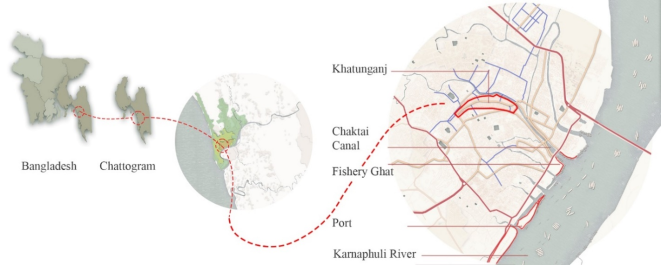
Figure 1. Location of Khatunganj trade hub in Chattogram district. (source: Author).
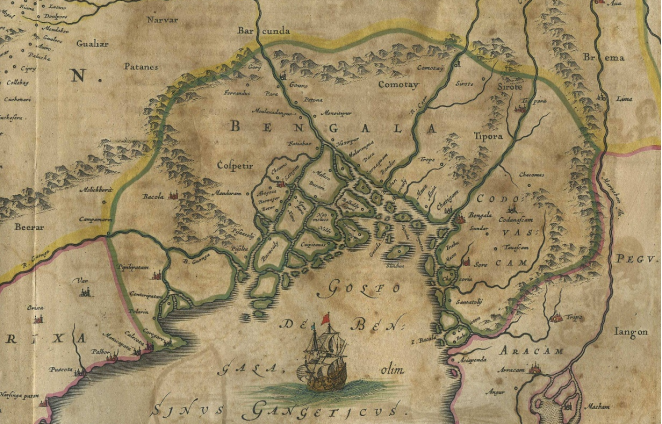
Figure 2. Growth of Chittagong city beside chaktai khal and karnaphuli river 1960 (Source: https://en.wikipedia.org/wiki/Chittagong).
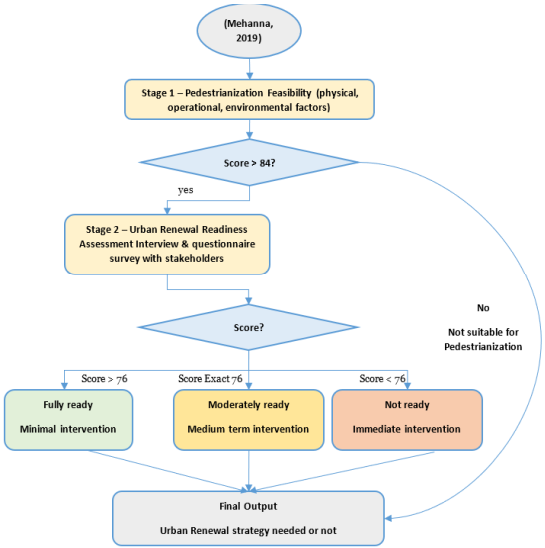
Figure 3. Developed evaluative framework based on decision-making matrix for urban renewal stablished by Mehanna (2019).
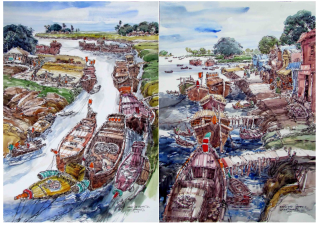
Figure 4. The pictures of artist Shohag Parvez showing the earlier wider Chaktai canal used for the trading and drainage purpose Source: [10].
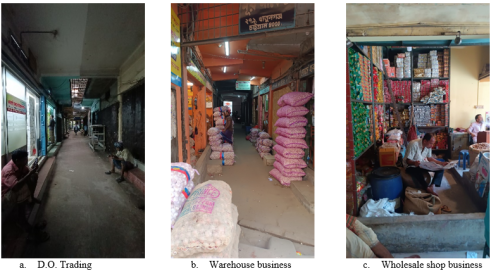
Figure 5. Trading culture in Khatunganj (source: Author).
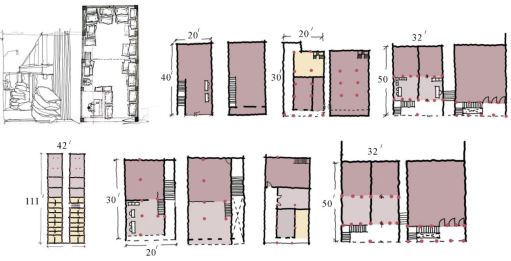
Figure 6. Business plans for various types of shops of the market (source: Author).
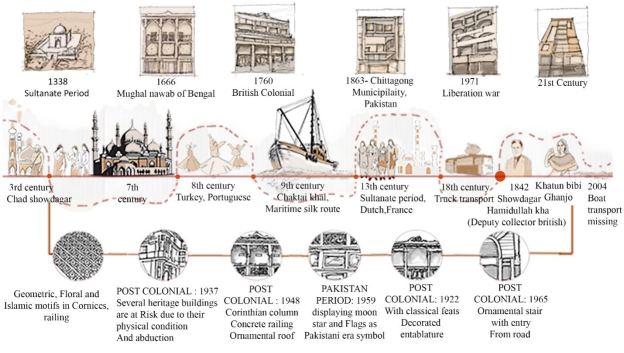
Figure 7. Significant architectural features of the market for centuries (source: Author).
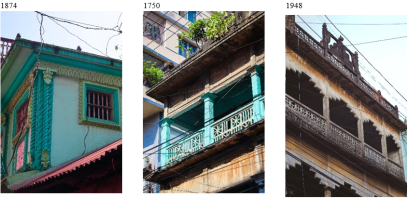
Figure 8. Various aspects of building and constructions of the historical buildings (source: Author).
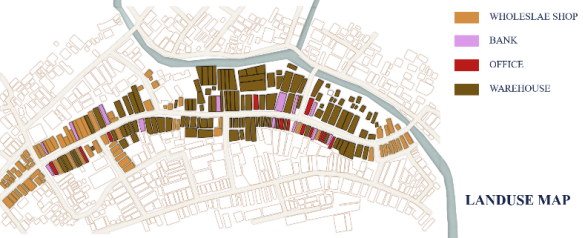
Figure 9. Land use map showing various types of functional zoning of Khatunganj (source: Author).
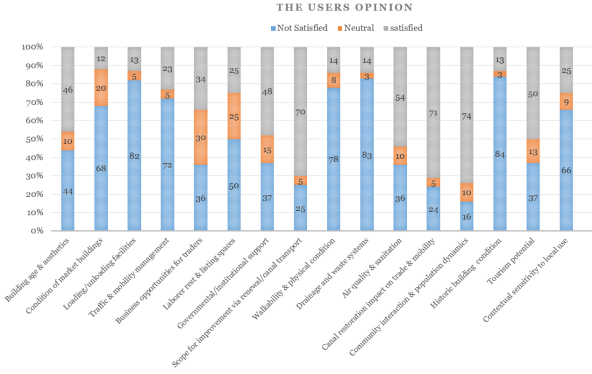
Figure 10. Stakeholder’s feedback over the questionnaire issues (source: Author).




 Share This Article
 Twitter
 Linked In
 Facebook
 Copy
Copy Download